Banner

Showing posts with label food. Show all posts

Sunday, 4 July 2021

Being green is hard!

We all want to save the planet. We may not be signed up to Green peace or Extinction Rebellion, but very few of us are blind to the problems that face Planet Earth and the part that humans have had in the crisis.

So we should do something about it, right?


I love to read books about being green. My latest two are:


However, I find that a lot of people who write or blog about being green seem to live in their very own little utopia (I'd love to be corrected on this, so please feel free to comment). It's just that, while actions are suggested with optimism and energy, there's very little acknowledgement of how hard these changes are for people in the real world. We all want to make the changes, but it's not as simple as waving a magic wand.


So we should all shop local and seasonal, buy at farmers' markets or make use of those brilliant zero waste shops? We should leave the car at home and cycle everywhere?


Fantastic idea!


However:

  • We don't all live in a metropolis where we use public transport to get to work and wander past little rows of shops with a grocer.
  • We don't all have a lifestyle that allows us to get into town when the market is on.
  • Most of us have to drop the kids off to school on the way to work, then rush to pick them up and get them to their next activity.
  • We live lives where we balance work, family life, voluntary work, pet care, home care and maybe even a little self-care or sleep - there really isn't much extra time in there!
  • Most of us live in places where public transport is shoddy at best and costs a fortune.
  • For most of us, going to town (where the grocers and the Farmers' Market and the Zero Waste shop can be found) involves driving and paying for parking.
We all know that supermarkets over-transport and over-package their goods, but sadly they have developed to offer convenience and efficiency for those of us who live busy, rushed lives.  It's hard to walk away from that, even though we know it needs to be done.


Use less plastic and eat less meat?


I agree with both of these.


These are definitely changes we need to make to help our planet. However, again, we don't all live a life where that's easy to do.


Most of us live in families.


It's hard enough to change our own habits, let alone to change other people.


If you're making packed lunches for four, switching from pre-packaged (in plastic) snacks and products to home-made goodness is appealing, but takes time and planning. Equally, eating less meat requires you to learn new recipes, meals and ways of cooking, which need to be delicious enough to convince certain members of the family that get confused if a meal has no meat in it.


So of course we want to be greener, but let's just acknowledge that part of the reason we are in the predicament we are in, is because we are in a crazy spiral where lifestyles rely on convenience and convenience relies on lifestyle. Some of the changes we need to make will require big changes to our priorities and our lives.


Let's just acknowledge that this is not an easy thing for people to do.


Let's also get rid of the idea that the only way to make a difference is to go the whole hog and become a green, vegan, tree-hugging super-hero. I mean, hats-off to those green super-heroes, but let's remember that every little helps (oh no! I see what I did there!). If we all look at the problem and think that it's too big to solve, that there's no point because we can't do it all, then the problem won't get any smaller at all.

"A journey of a thousand miles begins with a single step" Lao Tzu

 If we all do one small thing to make a difference, what a great big difference that will make. Once one change in your life has been successfully made, you can start to make another.

We're going to do this. We have to do this. But we can do it one step at a time.


Saturday, 23 January 2021

Pineapple Upside Down Cake


Anybody here like cake?

Hands up?

Yes, me too. And this particular cake is a bit of a sweet-toothed 80s bright coloured throwback, to a time when exotic fruit in a tin was the highlight of the week.

Making this seems a long time ago now, as it's two weeks since I last ate. 

(Not strictly true, but I am sticking to the diet pretty well and cake is not currently happening).

This cake is the perfect comfort food for a winter's evening.  Enjoy with custard.

Ingredients

butter (melted)                   100g
brown sugar                       1/2 cup
pineapple rings (drained)     440g can
Pineapple juice                    2tbsp
Cream cheese                    125g
butter (softened)                150g
caster sugar                        1 cup
rind and juice of 1 orange
2 eggs (lightly beaten)
self-raising flour                    1 cup

Method

  1. Preheat over to 180 degrees Celsius.
  2. Tip the melted butter into a 24cm round cake tin, brushing it up the sides to grease. (If you're using a loose bottomed tin, like me, be aware that it will ooze out in cooking).
  3. Sprinkle brown sugar over the butter and then arrange the pineapple rings over the base of the tin.  I popped glace cherries in the centre of each one for a really vivid pop of colour.
  4. Mix the cream cheese, butter and sugar with an electric mixer until light and fluffy.  
  5. Add the orange rind and juice, 2 tbsp of pineapple juice, eggs and flour.  Mix well until smooth.
  6. Spoon the mix into the prepared tin over the pineapples.
  7. Put the cake into the oven for 40-50 minutes until a skewer comes out clean.
  8. Leave to cool for 10 minutes and then turn out carefully onto a wire cooling rack.
This is one of my creative endeavours this month in my year of creativity.  Considering I had five creative things to do this month I've made a remarkably slow start. 

The crochet is going well, but I'm not sure if I'll finish this month.  I have at least bought the bottles I need to make the wine. I haven't even begun to think about the cushion covers or the macrame and the stuff to make the little dolls is just sitting there waiting for some attention! 

On the other hand, I have been running two Beaver meetings and two Cub meetings via Zoom, I have a lot of Phonics videos on my YouTube channel, and the children are getting on well with their home learning. There's certainly been some creativity going on in the house, even if it hasn't all been mine.
Endangered animals masks made with Beaver Scouts
I really don't know the purpose of the cardboard fort or the Harry Potter x Victorian costume - sometimes it's best not to ask.


Charlie's tin can tealight candle holders that he made with Scouts.

Charlie's pelican, penguin, cat mash-up that he did for an Art lesson.


Sunday, 8 January 2017

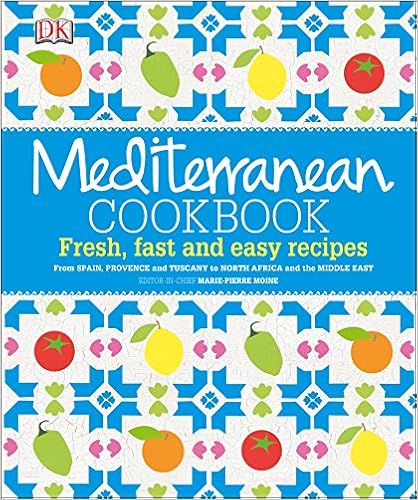
A Mediterranean Diet


Turn on the news these days and nearly every week you'll find some advice on what you should or should not eat - much of it contradictory.  Fad diets - 5:2, superjuice, "you are what you eat" (I know a brilliant joke about that one),carb free, gluten free, red and green days and all the rest make me want to go and stick my head in an oven.  I really like food - tasty and delicious food.  Some foods I like are healthy, some are very unhealthy (chip shop chips, blackforest gateaux etc.).  

I don't want to feel guilty about any food.  I want to nosh it down whenever I feel like it... within reason.  

I also want to be healthy.  

I accidentally lost quite a bit of weight between the Summer and Christmas.  I just lost my appetite through some combination of Vasculitis or the drugs I'm on to treat it, and managed to shift some weight that I've been trying to get rid of for about ten years.  Now that the appetite has come back, I'm keen not to pile the weight all back on if possible.  Hubby is also conscious that he's approaching half a century at the end of this year, and is anxious to lose some weight and live a healthier lifestyle.

One type of eating that we keep hearing about in a positive light is the "Mediterranean Diet".  Nobody is quite sure what it is about this diet that appears to have health benefits and support longevity - whether it's the red wine, the olive oil, the abundance of tomatoes, fruits and vegetables, the sea food, the cheese, the nuts and pulses, the convivial shared eating experience of "picking at" dishes or whether its some combination of all the above (or more sunshine), we just don't know.  What we do agree on is that both Hubby (and usually the children) love the flavours.  Spanish, Provencal, Greek, Turkish, Moroccan, Italian - all are food cultures that we thoroughly enjoy. 

This January I've heard Hubby harping on about extolling the virtues of both smaller portion sizes and "a more Mediterranean diet" a lot so on a trip to Waterstones decided to see if I could find a suitable new cook book to support the crusade.

Enter...

It's always a good sign when reading the cookbook makes your mouth water and you can't wait to get to the shops and buy in some of the ingredients you need to get started.  In this family there will always be room for Pie and chips or Staffordshire Oatcakes, but maybe we'll insert a bit more pitta with houmous, prawns dripping with garlic and chilli, olives and delicious salads in between and just possibly be a little healthier for it.  Or we'll have friends queueing up to partake of a bit of convivial red wine, cheese and garlic, and we won't care how healthy we are!

What's your latest new cookbook and what will you be cooking from it?

Sunday, 18 December 2016

My Bake Off Challenge - Week 2 - Biscuit Week

 Everybody loves the wonderful Great British Bake Off, right?  I do, and I had a plan to spend ten weeks setting myself my own Bake-Off challenges based loosely on the challenges set in the marquee.  Week One was cake week.  Of course, I then immediately failed, because by setting myself a one per week timetable, I didn't stick to it.  Even if I did bake every week, I certainly didn't post about it!

So here we are with Week 2 (two months later).
I love the idea of cookies, particularly since one day an American pupil gave me a gift of hand-made cookies, including a recipe, for Christmas.  What a lovely gift!  I've occasionally repeated the gesture, and given cookies and a recipe, since then.

Anyway, here's this gloriously simple recipe:

1) Preheat the oven to 190C and line two baking trays with greaseproof paper.
2) Beat 150g of softened butter with 80g light brown sugar and 80g granulated sugar until soft and creamy.
3) Beat in 1 egg and 2 tsp of vanilla extract.
4) Sift in 225g of plain flour, 1/2 tsp of bicarb of soda and a pinch of salt and then mix with a wooden spoon.
5) Stir in 200g of plain chocolate chips.
6) Put teaspoon sized blobs on the baking tray (leave plenty of space between them as they spread!)
7)  Bake for 8 to 10 minutes - they'll be golden brown but still soft in the middle.
8)  Leave on the tray for a couple of minutes and then transfer to a wire rack to cool.

Yum yum, they don't last long!

What's your favourite biscuit recipe?

Saturday, 21 May 2016

An ethical life - do meat and fish have a place?

I'm writing a series of posts on living more ethically.  Having tackled ethical shopping for fruit and vegetables here.  It's time to have a look at meat and fish.

In the UK some 860 million animals are reared every year for the food industry.  It's our favourite source of protein.  The average meat-eater will consume 760 chickens, 20 pigs, 29 sheep, 5 cows and half a trawler net full of fish in their lifetime.  
image from theguardian.com
What are the ethics involved in meat-eating?

There are a couple of ethical issues to consider.  Meat production has become more intensive, which means that on the plus side, meat has come down in price, but on the negative side, means that animals are often suffering as a result, either through over-crowding, lack of proper attention to health and well being and lengthy transportation of live animals.  In addition, in order to farm intensively, animals are often kept in unnatural environments, given hormones to reproduce more than they would naturally, given antibiotics to prevent illness rather than treat it.  Intensive meat farming where far more animals are stocked in a smaller area can also lead to agricultural pollution as waste runs off the farm and into water courses.  Reliance on commercial feed rather than grass to feed this large number of animals also leads to environmental and social problems elsewhere, with land used to grow food for animals, consuming both land and water that could have been used to grow food for humans - it takes 900 litres of water to grow 1kg of wheat, but 100,000 litres of water to raise 1kg of beef.  A real strain on resources in a world where resources are far too scarce and too many people are dying through lack of food and water.  The end product is often over packaged and is routinely injected with water (to increase the weight and price) and preservatives.

As an extra issue, meat is also high in saturated fat, so too much of it could be placing a strain on our bodies and therefore on our health services.
And fish?

Fish stocks are in serious trouble.  We are taking too many fish out and not leaving enough for them to be able to reproduce quickly enough to replenish their stocks.  When we fish on a large scale, we also employ techniques which regularly decimate entire ecosystems, or inadvertently kill other species.  To counter the over-fishing problem fishing quotas have been in place for years, which means that to feed the desire for fish (and for our own health we are being told that we should be eating more fish, aiming for at least two portions per week), we are increasingly turning to fish farms.  Fish farms have their own ethical problems, as they routinely treat the fish with antibiotics, anti-parasite chemicals etc.  Prawns are usually farmed in developing countries which often employ child or very cheap labour, coupled with dangerous working conditions using a range of toxic chemicals which are then routinely dumped in the sea.
Vegetables
image from the Vegetarian Society of Ireland
What would the ethical choices be?

The most obvious ethical choice would be becoming vegetarian, or better still vegan, avoiding propping up the meat industry entirely.  Alternative sources of protein include quorn (a synthetic fungal protein) and soya or tofu (which has its own ethical issues such as deforestation to grow soya, and the use of genetically modified soya).

If giving up meat entirely is a step too far, then you could consider reserving meat for the weekends and special occasions.  This would make it easier too to make other ethical choices (which may cost more) about the meat that we do consume:

  • when buying any meat, opt for organic and free-range as it means that the animal will have been treated better, with lower stocking densities, access to feed outdoors etc.  Look for the organic and RSPCA Freedom Food logos.
  • buy meat from a local butcher who should be able to tell you the source and provenance of their product.  It's also unlikely to be injected or tampered with (especially if you can see the butchery with your own eyes!) and over-packaged;
  • buy lamb in the Summer.  Lambs are born in the spring, so should be big enough to eat by early Summer.  In order to have "Spring lamb" in the supermarkets in February the poor ewe is being given hormone treatments and often forced to give birth as many as three times during the year, or live lambs are being transported across the continent in dreadful conditions between where they were farmed and where they will be slaughtered, so they can be delivered to supermarkets as fresh as possible.
  • Opt for line-caught or organic fish;
  • choose pollock, or plentiful haddock, instead of cod.  Check the Good Fish Guide, from the Marine Conservation Society, for a list of sustainable fish.
  • Choose smaller cold-water Atlantic prawns rather than larger Tiger or King prawns (the ones farmed in developing countries).

And the Ink Spots household?

I'll be honest here.  I like eating meat.  I was a vegetarian for a while, as I didn't think I'd be able to kill an animal, and if I couldn't kill one myself, then it wasn't right to eat them.  My husband (before he was my husband) defeated me with the logical argument: "well you can't do your own colonoscopy either, but if you needed one doing you'd get somebody else to do it for you."  I started eating meat again with only a little guilt.  I'm a sucker for a lovely bit of roast and a bacon sandwich.

However, for all the reasons above, I am trying to cut down on the meat a bit.  I don't think that we'll be able to reserve it for the weekends, "you forgot to put any meat on my plate!", but I have been able to swap a meaty mid-week meal or few to things like jacket potato with cheese and beans or tuna, omelette, or pasta with a vegetable sauce.  I'll keep gradually making these swaps until it becomes more of a habit for all of us.  
I only buy free-range chicken, but need to make more of an effort to buy organic and free-range meat all the time, and use local butchers... which becomes easier and more affordable the less meat we eat.

I only buy pole and line caught tuna,  but I do need to be more selective about the prawns I buy (I just love those juicy big ones - now I'm not so sure!) and make sure that I buy a range of fish from the sustainable list.

I guess the answer here is that while with fruit and veg I was doing okay but still had more to do, with meat and fish I am a long way from making the kind of ethically sound choices that I would wish for.  Still, as I mentioned in my first post about ethical living, the choices we make towards an ethical life have to be made one at a time, small steps towards better habits.  We're taking those steps, and knowing that we need to is a good start.  I'll review how we're getting on as time goes by.

What about you?  Do you buy sustainable fish?  Organic meat?  Have meat-free Mondays?  Are you a vegetarian or vegan and wonder how I could touch a bacon sandwich?  Are you trying to cut meat down in the diet of a carnivorous family member?

Tuesday, 29 March 2016

An Ethical Life - choosing what fruit and veg to buy

As part of my series on living more ethically, I'm going to start by thinking about fruit and veg.

It seems an odd thing to worry about, when so many people in the world don't have enough to eat at all, or are suffering the ill effects of malnutrition.  So many people live without the luxury to be able to choose what kind of fruit and vegetables to eat, they are just glad to get anything to eat.  But actually that's just the point.  Those of us who do have that luxury, should take advantage of it to make good and wise choices about the provenance of our food that will, in the long run, benefit those elsewhere in the world or our communities who do not have that luxury.

Every time we look at our plates we should ask ourselves where the food came from, how it was produced and what it cost - not just in terms of money, but in terms of the environment and social justice.

So what about fruit and vegetables?
We are advised by health professionals that for good health we should be eating five portions of fruit and vegetables per day.  Actually, the food gurus suggest this should be closer to nine portions per day, but with average consumption at only three portions, a push to five seems slightly more realistic.  However, eating more fruit and vegetables, while beneficial to health, isn't about ethics.  What is about ethics is how we eat and buy those fruits and veggies.  We are living in a time when you can walk into a supermarket at any time of day or night, any month of the year, and expect to buy a pineapple or some strawberries - despite the fact that these products do not grow locally, or are in completely the wrong season...is this right? 

Every time we pick up an apple or pineapple we need to consider:

  • pesticides
  • food miles
  • grower and picker rights
  • season
Pesticides
To entice us to buy fruits and vegetables, supermarkets lay out stacks of perfectly formed specimens.  Unfortunately, this means that 20-40% of farm produce is wasted, because it isn't perfect enough for our shelves, even though it tastes absolutely fine.  It also means that to reduce the risk of blemished produce, the farmer relies more and more on a range of pesticides and fertilisers (the fertilisers also keep the food available out of season, which we'll come back to later).  The fertilisers also cause massive problems in the environment, as soil biodiversity and water courses are polluted by the run off from farmers' fields.  The very creatures on whom we rely to pollinate our crops (bees and other pollinating insects) are damaged by the chemicals we put on the crops to help them grow better.  In developing countries, without such stringent safety controls, farm workers handling these chemical pesticides are often also put at risk to their health.
from food.ndtv.com 
As a consumer, we can change things for the better by:
  • accepting (or even seeking out) fruit and veg that doesn't necessarily look perfect.  Jamie Oliver is on a mission to sort this out and has convinced ASDA to try a "wonky veg bargain box" which seems to have gone down very well. 
  • Buying organic produce.  Yes, it costs a little more, but organic farms do not pollute the environment.  Plus, because they use natural methods to keep their farms healthy, such as crop rotation, they tend to be more biodiverse environments rather than the big swathes of monoculture operated by industrial pesticide farms.
  • Growing your own.  If you've got even a small space and can grow a few of your own fruits and veggies in season, then you know you've got something on your plate that hasn't contributed any pesticides to the environment (as long as you grow organically of course!!)
Food Miles
Is it crazy that for every 100 items of fruit and veg eaten in the UK, only five are grown here?  In 2003 the Guardian bought a basket of fresh food containing twenty items.  It included pears, tomatoes and lettuce.  The total food miles of the produce in the basket was more than 100,000 miles!  Peas are being air-freighted from South Africa, lettuce is being flown in from Spain, tomatoes from Saudi Arabia.  Supermarkets want to give us what we want, and we want a wide variety of cheap fruit and vegetable available year-round.  So they provide it, shopping around globally for the best deal.  The problem is that this is not the best deal for the planet.  Food miles, and in particular air-freight food miles, contribute 20% of the UKs greenhouse gas emissions.
What can we do about it?
  • buy local (not just "British grown" from the supermarket, as despite the fact that your apple may have been grown in the orchard next door to the supermarket, it will still have been taken to a centralised sorting/storage point, then perhaps somewhere else to be packaged, then somewhere else to be distributed, then back to the supermarket to be sold.)  Buy from local green grocers, farmers markets, box schemes or farm shops, where the food is actually locally sourced.
  • Grow your own, then the food miles are food steps - close to zero pollution.
  • If you really want to buy fresh fruit and veg that isn't in season (more on seasonality later) or doesn't grow locally - and who doesn't love a banana or pineapple - then try to get food that has been trucked in from mainland Europe rather than air-freighted.  If you're still hankering for that fresh pineapple that you really can't source locally, then think carefully about the country that it came from, and try to make decisions not to buy things from countries who make poor ethical decisions.
Grower and Picker Rights
While it's great to get fresh fruit and veg for a bargain price, we need to think about how realistic those prices are.  If we are paying next to nothing for fruits and veg, then it's highly likely that whoever grew it is getting even less - I mean, even with economies of scale, the Supermarket is focused on profit isn't it?  Because supermarkets buy in such large quantities they can force the farmer to accept a lower price than they would normally.  This means that either the farm becomes unprofitable, or the workers on the farm are paid less, or put in more dangerous or awful working conditions to cut costs.  In addition, because our farmers receive subsidies from the government and the EU, it makes sense for them to produce more than we need, thus making it much harder for farmers in the developing world to make any money.
To shop ethically with regards to grower and picker rights:
  • seek out the Fair Trade logo, which ensures that farmers, usually in the developing world, have been paid a fair price for their produce;
  • grow your own - you are the grower and picker;
  • buy from local farm shops, farmers markets or pick your own, where you can see or ask questions about conditions and prices;
  • ask questions - are the strawberries you are buying picked by migrant workers, and if so are they treated fairly and paid a decent wage?  I live just up the road from a massive S&A soft fruit farm, and I often wonder how the workers there are treated.
Season
Science is a wonderful thing, and advances in agricultural and food storage science have meant that we are able to grow or preserve fruit and veg to such an extent that from somewhere in the globe, we are usually able to get pretty much any fruit and veg that we want, year round.  By doing this we are a) increasing our food miles, b) losing biodiversity, because we tend to only cultivate the fruits that will have the longest storage, or the longest harvest time, c) losing out on taste and nutrients because fruit and veg loses out during storage and transport, d) blighting our countryside with the polytunnels that we need to grow this fruit and veg over such an extended period and e) losing touch with the cycle of the seasons.  
from eatseasonably.co.uk
  • grow your own
  • buy from farmers markets, farm shops and pick-your-own etc. 
  • in the supermarket, seek out British grown produce that is in season now (this is not easy.  I live in Herefordshire, one of the biggest apple producers in the UK, and yet even as the apple harvest was in full swing all around me, and there were free windfall apples on offer at nearly every farm gate, the choice in the supermarket was still pretty much limited to imported Granny Smiths and Golden Delicious!).
How do we shop for fruit and veg ethically in the Ink-Spots household?

Not nearly as well as I'd like, which is what this series of posts on the blog is all about really.  Working full-time, I still rely on the convenience of the supermarket for much of my shopping.  

I've made enquiries about a fortnightly delivery from a local fruit and veg box scheme, and have now prioritised it to get on and join the scheme as soon as I'm back from holidays (www.growinglocal.org.uk if you're interested).  I did get a veg box delivery when we lived in Scotland, but found the choice in the bag limited in the winter, and in the Summer grew most of what we wanted anyway so didn't bother in the end.  

Here I have a rented garden with very limited growing space, so while I grow my own herbs, and plan to grow lettuce, tomatoes, carrots, chard and a few potatoes again this year, my growing-your-own options are pretty limited until we've got a long-term home and garden again.  

I do opt for Fair Trade wherever there is a choice.  

I love our local pick-your-own, and the children love to go there with a shopping list for fruit, which I also found remarkably inexpensive, and will continue to visit there as often as I can.  

Organic produce is still all too often a little too pricey in the supermarket, but I think I should go for it a bit more often.

I'm not too good at seasonality - partly because we always want a nice salad, tomatoes and so on.  The strawberries I've bought recently have been noticeably tasteless, so I'll give them a miss now until they are actually in season.  I think using the fruit and veg box scheme should help me to keep a bit closer to the seasons.

The same applies to air miles.  I love a banana, a pineapple, and chillies and lemongrass and so on, even though I know that they are air-freighted across the world.  Hopefully having a bag of local fruit and veg that needs using up will encourage me to be a bit more inventive with local foods, and have the air-freighted foods a bit less frequently.
court farm leisure, my local pick-your-own and farm shop, Tillington, Herefordshire

Monday, 23 March 2015

Chocolate corn flake nests and a couple of cloaks - Monday's make

Today I've made two more reversible play capes from "Growing Up Sew Liberated" by Meg McElwee.  I had a special request for this colour combination on my Etsy shop (link on right), and always make two things rather than one (economies of scale!), so I've already dispatched my commissioned order, and have a spare in stock.


I also made a dozen of these cornflake confections with the children just now:


I wanted to include some information on my decoupage experiments, but since they aren't finished yet, I'll post on those at a later date, and you can just get a sneak preview:


What have you been making this week?

Thursday, 12 March 2015

Feed your family for under £50 in February - Conclusion

If you're a regular reader of this blog you'll know that during the month of February I was attempting to reduce my weekly shopping bill for a family of four to £50 per week.

I started the challenge, and outlined a few ideas of how I might achieve it here.

I detailed progress in Week 1 here, Week 2 here and Week 3 here.

Now it's time for the conclusion.

It's safe to say that I didn't once achieve my £50 target.  Here's why:

  • my family likes meat, and meat is expensive.  If it isn't expensive, you start to wonder whether it's fair on the farmer or whether the animals were treated well.  Where possible I buy organic and free-range meat.  That makes it even more expensive, but I feel strongly about it so the only way to cut down on the meat bill is to cut down on meat eating.
  • We all have home-made lunches.  The cost of Hubby's lunches has dropped considerably since he started taking a packed lunch (although he's occasionally admitted to "topping up" at the canteen at work!).  C could be having a free school-dinner (all Foundation and KS1 in England are entitled) but for some reason prefers to have a home packed lunch.  Bug either eats at home or has a packed lunch, and I always eat at home.  The costs of packed lunch items probably adds about £10 to the weekly bill, if not more.
  • We're food snobs.  Lets face it, we like freshly made granary loaves, nice continental meat selections, artisan cheeses, real ales and local ciders, olives and balsamic vinegar.  I make home made casseroles, lasagnes, cakes and so on, and really enjoy cooking and trying new recipes.  I'm certain that we would spend a lot less on our shopping if I bought a cheap sliced white loaf, mild cheddar, value meat and chips and cheap packaged cakes... but we like it our way.
We did spend a lot less on food during February, and crucially we threw less away as well.  I went shopping more often but bought less, focusing on the next few meals and buying what we were actually going to eat.  In some ways that put the bill up, because using the village shop for things like milk and meat was more expensive than going to the supermarket, but it was also local meat and milk, so I didn't begrudge that at all.

I do think it's been a worth while exercise, because its shown me what is important to me when it comes to buying food - and it isn't the cost.  I do think I'll continue buying little and often, which allows me to pop to the local market and pick up a few things, to visit the butcher and to pick up a bargain when I spot one, without worrying that I'll end up chucking out excess. 

Wednesday, 25 February 2015

Feed your family for under £50 in February - week 3

I'm now three weeks into my challenge to Feed the Family for under £50 for a week, and haven't yet managed, though this week is much closer (you'll see why shortly!).  

In my original post I talked about making more porridge for breakfast, making more home-made soups for lunch, making the meat go further, and cutting down on alcohol.

The porridge thing, well... we all like porridge, but just lately C and Bug (and I) have been feeling like cereal or toast instead so we haven't had porridge more than about once a week.

Home-made soups for lunch.  It's not so much that it's time consuming, as once you've chopped the veg you've pretty much made lunch for the week.  It's just that it involved forward planning - and I'm spinning enough plates at the moment.

Making the meat go further is working.  I've bought a pack of meat, and rather than using it all (because it's a pack), I've used only half, and bulked out with veg, bread, salad etc. to make the meat stretch for another meal.

Cutting down on alcohol is also working.

This week I've done small local shops and have spent about £60.  HOWEVER - this includes shopping for ingredients to make a birthday cake, and shopping for a birthday tea party.  IT DOESN'T INCLUDE the shopping that Hubby did because he fancied more interesting stuff in his packed lunches, and some cheese, and some cider.  NOR DOES IT INCLUDE the two meals out on the actual birthday.

I do feel that I'm wasting less food this week, and I'm being more mindful of using food that I already have, and what I need to buy.  Planning just a day or two in advance seems to be working better for me than the weekly shop, even if it does mean that I absolutely have to remember to stop and buy spaghetti at the shop when I pick up C this afternoon, otherwise we're stumped for dinner!

Are you trying to cut down your weekly food spend?  What hints and tips can you recommend?

Wednesday, 18 February 2015

Feed your family for £50 in February - week 2

I set myself a challenge for February to try to do all my weekly grocery shopping for under £50 per week for my family of 4.

We're now at the end of the second week and I think it's fair to say that I am failing miserably!

In Week 1 I did my usual weekly shop on the Tuesday (but did spend a lot less than usual), and then my usual top up shop for the weekend - totalling about £65.

I decided that for Week 2 I was not going to do a large weekly shop (with the waste entailed as things start to get a bit manky towards the end of the week).  Instead I was only going to plan the menu a couple of days ahead, using things that I already had in the kitchen as much as possible, and was going to do small regular shops using the town-centre, butchers and grocers a bit more and avoid the supermarket.

That's all well and good, but small children seem to do very odd things to toilet rolls, soap dispensers and toothpaste - and I always seem to need those things.  Supermarkets are the cheapest and most convenient source of those items, so instead of skipping the supermarket this week, I seem to have gone there every day or two for small shops instead!  Looking now at my receipts for the week (and because I've been doing small shops I've paid cash a couple of times) I've spent at least £65 this week.

I do like the just shopping for the next couple of days thing though, as long as I'm going to be passing a shop at some point each day, and am not having to make a special journey for it.  I do like a nice full fridge, it somehow tells you that you're not going to go hungry; but I also like that I'm not digging through manky salad and having to throw things out.  I can see what I've got and what I need.  This week, so far I'm doing okay.  I popped to the supermarket yesterday for things for last night and some other essentials, costing £22, and then I topped up for lunch today and dinner tonight for just £6.  I'm definitely going to take the children to visit a real greengrocer and butcher in the next couple of days too.  I'll let you know how that goes next week.

Friday, 23 August 2013

Leftover Lunch

As a mum with little beans at home, I want lunch to be both nutritious and appealing.  One can't live on bacon sandwiches alone more's the pity.

This lunch is an ideal for using up bits and pieces around the fridge, is very easy and equals absolutely no fussing.

Simply get a large plate and put lots of bits and pieces from your fridge: leftovers from meals, bits of fruit and salad etc.  Try to provide a mixture of protein and salad and fruit items to keep things nice and balanced.  Today our plate had on it:

  • leftover pork chop from Tuesday night (chopped)
  • cucumber
  • leftover risotto from Wednesday night in a bowl
  • cherry tomato quarters
  • leftover chicken thigh from last night's Paella (chopped)
  • grated cheese
  • salami (chopped)
  • grape halves
Then give each person as many pitta pockets as you think they are likely to eat, and get them to help themselves.  You don't have to use Pitta bread, other types of bread or jacket potatoes are fine, but my offspring really enjoy filling pitta pockets so it keeps lunchtime fun!

Tuesday, 5 February 2013

What to do with limes

I have five limes sitting in my fruit basket.  They've been there for a couple of weeks and are definitely now past their best.  I needed one for a recipe, but this particular supermarket only sold them in packs of 6.  For some reason we aren't drinking much G&T at the moment, so the limes are just sitting there.  So a quick web-search has revealed the following uses for my limes:

image from www.journeytom.com
Get a case of Corona, put a wedge of lime in the top of each bottle and drink.  I'm liking this one, though I'll need to drink a lot of Corona to use up 5 limes!

Squeeze the juice and freeze it to use in future recipes.  Very practical.  I'm liking.
image from www.whatscookingamerica.net
Slice and freeze, ready for when we are back on the G&T in the future.
image from www.freeextras.com 
Yoghurt, mint and lime marinade - for any meat.  (from Jamie Oliver's The Naked Chef): 1 pint natural yoghurt, 2 handfuls of chopped fresh mint, zest and juice of two limes, 1tbsp coriander seeds (crushed), salt and pepper and a couple of tbsp olive oil.  Mix together all the ingredients and smear over the meat - leave to marinade.
image from www.jamieoliver.com 
Refreshing drink - slice the limes, add a cupful of white sugar.  Mash the limes and sugar until all the sugar has dissolved.  Leave to stand for ten minutes.  Top with 6 cupfuls of water and a cupful of ice and serve in tall glasses.
Coconut Lime Pancakes
image from www.ocado.com 
Pancakes with lime and sugar instead of lemon and sugar.

I'm loving these ideas!

Saturday, 31 December 2011

Funny food fancies in toddlers

I knew it would be coming at some point, but the time has arrived.  C is showing some likes and dislikes with food.  I think all toddlers go through this, and the way to prevent it developing into serious food faddiness or fussiness is just to keep very chilled about it.  "Oh, you don't want to eat that.  Okay" (but don't go and cook something else for them!).  "You don't like mushrooms at the moment?  Okay, I'm sure you'll like them again soon.  Just leave them on the plate."

At the moment he eats tons for breakfast and lunch, but not much at dinner time (still likes his dessert though!).  He's not into potatoes, but loves his bread.  He's not liking mushrooms, but will devour peas.  
photo from http://www.tripadvisor.co.uk/LocationPhotos-g551858-d1145667-Jannel_Bed_and_Breakfast-Stornoway_Isle_of_Lewis_The_Hebrides_Scotland.html 
The best one was today though, when he asked for some black pudding from daddy's plate while out at a cafe, and then announced that "Black pudding is my favourite."  For those not from the UK, where this dish is part of the traditional breakfast, black pudding is a sausage (you usually get served a thick slice, lightly fried) made from pigs blood, blended with onions and oatmeal.  Sound delightful?  It really is, though not something I would imagine many toddlers have on their "favourite food" list.

Thursday, 1 September 2011

Podding peas:

So, as I try to grow a few veggies, and want my children to know about food and where it comes from, Little C and I have been out in the garden gathering harvest.  
The latest selection included a good bowl full of peas, several courgettes, some baby carrots and a few raspberries.  Afterwards I taught Little C to pod peas.  
It took a long time, and these photos don't do justice to the concentration on his little face, but he loved it.